
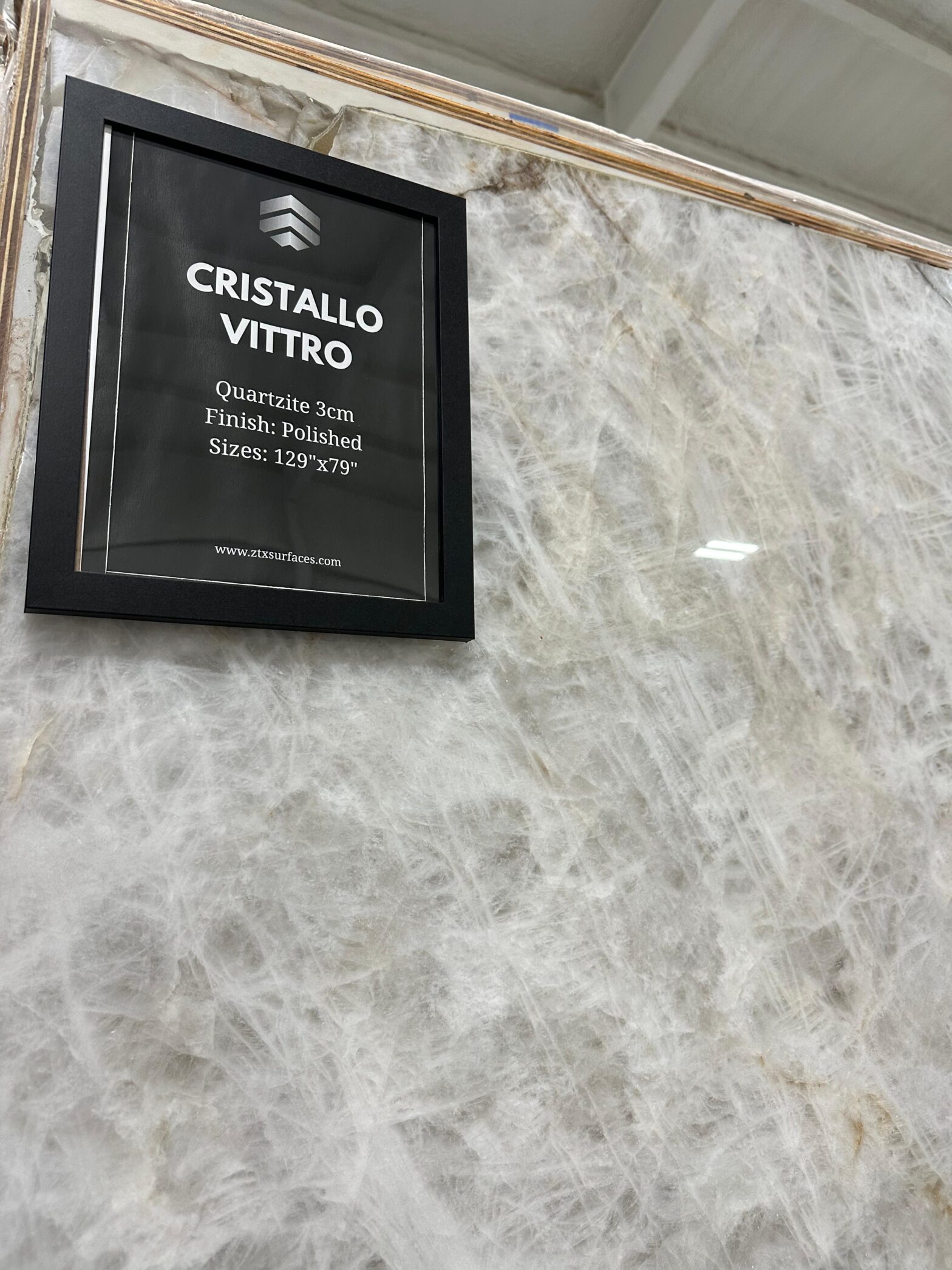
Quartzite and quartz — they sound almost identical, and they’re both popular countertop choices in Rockwall and DFW kitchens. But they are completely different materials, with different origins, different performance profiles, and very different price points.
The confusion is understandable. Walk into any showroom in the DFW area and you’ll find both on display, often looking similar at first glance. But once you understand the difference, the choice becomes much clearer — and you’ll know exactly which one fits your home, your kitchen, and your lifestyle.
At ZTX Surfaces, we carry both quartzite and quartz and work with Rockwall homeowners every day who ask this exact question. This guide gives you the full picture — no marketing spin, just honest comparisons and real local pricing.
Also read: Quartz vs. Granite Countertops in Rockwall, TX | How Much Do Countertops Cost in Rockwall, TX?
First: What Exactly Is Quartzite?
This is where most people get confused — quartzite is not the same as quartz.
Quartzite is a 100% natural metamorphic rock. It forms when sandstone is subjected to extreme heat and pressure deep within the Earth’s crust — transforming it into one of the hardest natural stones available. The result is a stone that looks strikingly similar to marble (dramatic veining, creamy whites and greys) but is far more durable and scratch-resistant.
Popular quartzite varieties available at ZTX Surfaces:
- Taj Mahal — warm white with subtle gold veining, the most sought-after quartzite in the DFW market
- White Macaubas — bright white with light grey movement, a clean marble alternative
- Sea Pearl — grey, green, and cream tones, very organic and dramatic
- Fantasy Brown — warm beige with brown and grey veining, incredibly popular in Texas kitchens
Quartz, on the other hand, is an engineered stone. It’s manufactured from 90–95% crushed natural quartz crystals combined with resins and pigments. Because it’s made in a factory, quartz is consistent in color and pattern — you get exactly what you see in the sample, every time.
The Core Difference at a Glance
| Feature | Quartzite | Quartz |
|---|---|---|
| Origin | 100% natural metamorphic rock | Engineered: 90–95% quartz + resin |
| Appearance | Unique — marble-like, organic | Consistent and uniform |
| Hardness (Mohs) | 7–8 | 7 (resin reduces real-world scratch resistance) |
| Heat resistance | Excellent — withstands direct heat | Moderate — resin discolors above ~300°F |
| Stain resistance | Good — requires sealing | Excellent — non-porous, never seals |
| Maintenance | Seal every 1–2 years | Zero maintenance, no sealing ever |
| UV resistance | Excellent — outdoor use possible | Poor — UV causes color shift over time |
| Best for | Luxury kitchens, natural stone lovers | Busy families, modern kitchens |
Durability: Which One Actually Lasts Longer?
Scratch resistance: Quartzite scores 7–8 on the Mohs hardness scale, making it harder than most granite and significantly harder than engineered quartz in real-world use. The resin in quartz makes it slightly more susceptible to scratching from abrasive surfaces over time.
Heat resistance: Quartzite wins by a significant margin. Because it’s a natural stone formed under extreme heat, quartzite handles hot pots and pans without damage. Quartz’s resin content means heat above 300°F can cause discoloration or cracking — always use a trivet.
Stain resistance: Quartz wins here. Its non-porous surface resists virtually any liquid without absorbing anything. Quartzite requires sealing to prevent staining from acidic liquids over time.
UV and outdoor use: Quartzite is fully UV-stable — it doesn’t fade in sunlight, making it ideal for Texas outdoor kitchens. Quartz can shift color with prolonged UV exposure and is not recommended for outdoor installations in Texas.
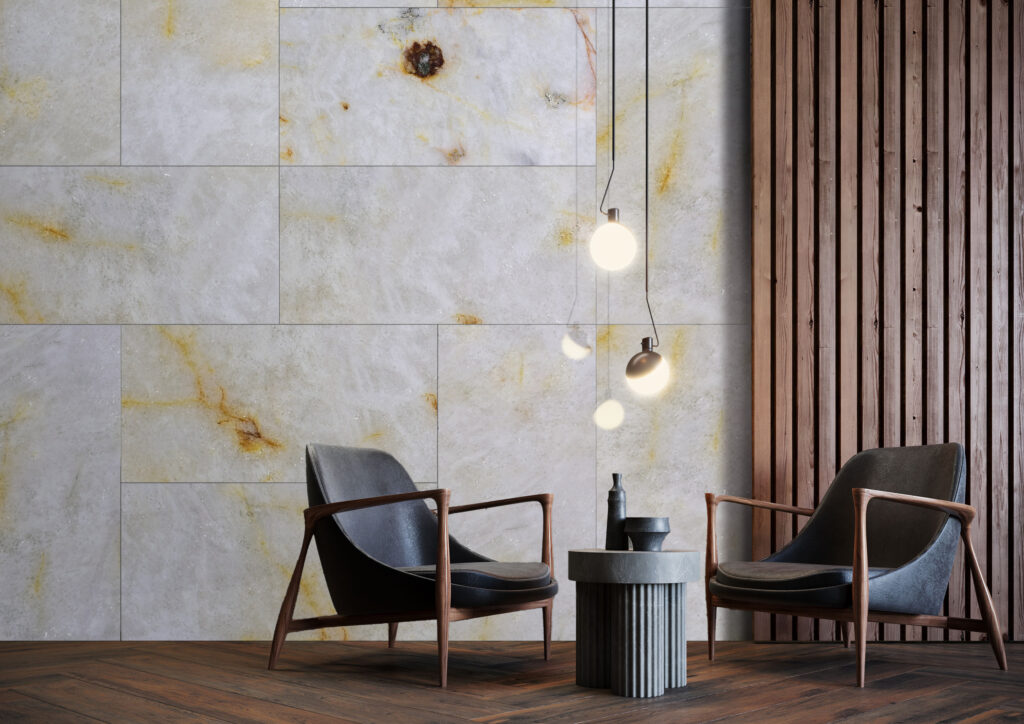
Appearance: Can You Tell Them Apart?
High-end quartzite and marble-look quartz can appear almost identical at first glance — both feature white backgrounds with dramatic grey or gold veining.
The differences up close:
- Quartzite has natural, organic variation — no two slabs are the same. The veining flows unpredictably and has genuine depth.
- Quartz veining is manufactured — designed to look natural, but tends to repeat and feels slightly more uniform under scrutiny.
- Quartzite has a crystalline structure that catches light differently depending on the angle.
For Rockwall homeowners who want the look of high-end Italian marble without marble’s maintenance, quartzite — specifically Taj Mahal or White Macaubas — is the closest natural alternative available.
Maintenance: What Does Each Require in a Texas Home?
Quartzite: Seal once or twice a year (30-minute process). Clean with pH-neutral stone cleaner or mild dish soap. Avoid prolonged contact with acidic liquids on unsealed surface. Heat-safe — no trivet needed.
Quartz: Wipe with soap and water — nothing else required. Never needs sealing. Avoid placing hot pots directly on the surface. Keep away from prolonged direct sunlight in Texas homes with large windows.
Want to know what this would cost for your kitchen? Contact us for a free quote — we’ll give you an accurate estimate based on your specific project.
Which Should You Choose for Your Rockwall Home?
Choose quartzite if:
- You want a truly unique natural stone with marble-like beauty
- You cook frequently and need heat resistance without worry
- You have an outdoor kitchen or sun-exposed space
- You’re investing in a luxury or forever home
- You want the look of marble without marble’s fragility
Choose quartz if:
- You have kids, pets, or a high-traffic kitchen
- You want zero maintenance — no sealing, ever
- You want consistent, predictable color and pattern
- You’re building for resale and need broad buyer appeal
- Budget is a factor — quartz delivers excellent results at a lower price point
ZTX Surfaces — Quartzite & Quartz in Rockwall, TX
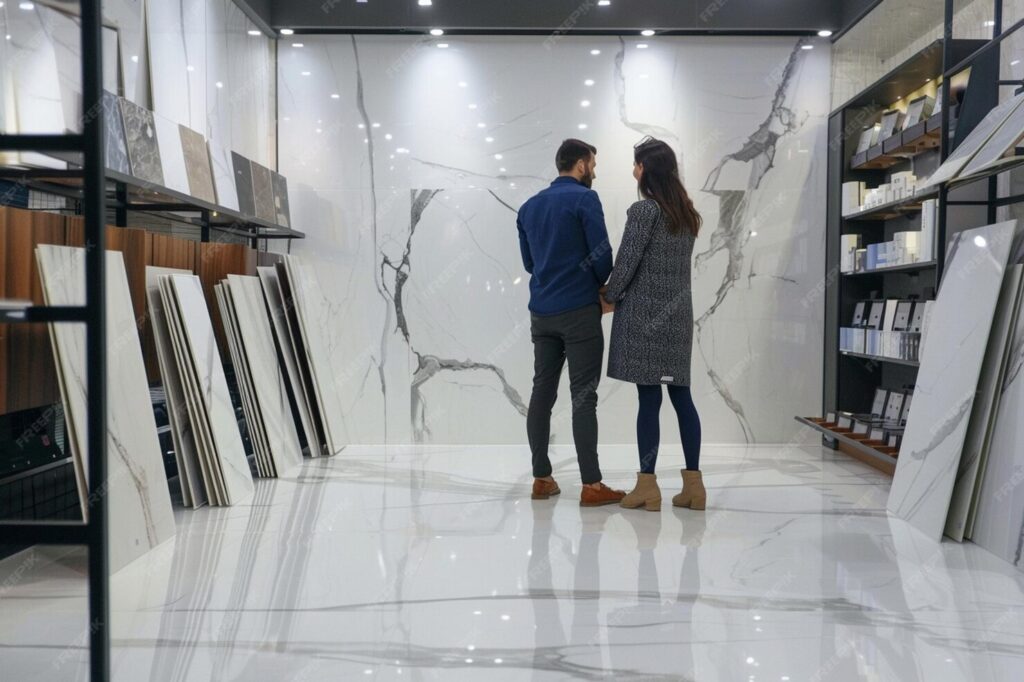
ZTX Surfaces carries one of the widest selections of both quartzite and quartz in the Rockwall and DFW area. Our inventory is sourced directly from quarries in Brazil, Europe, and beyond — rare slabs you won’t find at regional distributors or big-box retailers.
- Browse our quartzite countertop collection — Taj Mahal, White Macaubas, Sea Pearl, and more
- Explore our quartz countertop collection — from clean whites to dramatic veined patterns
- See both installed in real DFW homes at our project gallery
In-house fabrication, no subcontracting, fabricator-direct pricing. Most Rockwall projects complete in 2–3 weeks from template to installation.
Serving Rockwall, Heath, Wylie, Sachse, Fate, Rowlett & Greater DFW
Our showroom at 263 Ranch Trail, Rockwall, TX puts us at the center of the eastern DFW corridor. We serve homeowners in Heath, Wylie, Sachse, Fate, Rowlett, Garland, Mesquite, and beyond — with direct-from-quarry inventory and in-house installation.
Frequently Asked Questions: Quartzite vs. Quartz
Is quartzite harder than quartz?
Quartzite scores 7–8 on the Mohs hardness scale, making it one of the hardest natural stones available. Engineered quartz scores around 7, but its resin content makes it less scratch-resistant in real-world use than the rating suggests. For scratch resistance, quartzite has the edge.
Does quartzite need to be sealed?
Yes. Quartzite is a natural stone and needs sealing once or twice a year to protect against staining. The process takes about 30 minutes with a spray-on sealer. Quartz is non-porous and never needs sealing.
Can quartzite be used outdoors in Texas?
Yes — quartzite is one of the best countertop materials for Texas outdoor kitchens. It’s UV-stable and heat-resistant. Quartz is not recommended for outdoor use in Texas because the resin discolors with prolonged UV exposure.
Why does quartzite cost more than quartz?
Quartzite is rarer, harder to extract, and more labor-intensive to fabricate due to its hardness. Premium quartzite like Taj Mahal is sourced from specific regions in Brazil and is in high global demand, which also drives up the price.
Does quartzite look like marble?
Yes — many quartzite varieties, especially Taj Mahal and White Macaubas, closely resemble high-end Italian marble with dramatic veining. The key difference: quartzite is significantly harder and more durable than marble, and requires less maintenance.
Which is better for resale value — quartzite or quartz?
Both add value to a Rockwall home. Quartz appeals to a broader range of buyers due to its low-maintenance reputation. Premium quartzite (Taj Mahal, Sea Pearl) is a strong differentiator in the luxury segment. For standard resale, quartz is the safer choice; for luxury properties in Heath or Fate, quartzite can be a standout feature.
Can I see quartzite and quartz side by side before deciding?
Absolutely — that’s exactly what our Rockwall showroom is for. Seeing both at full slab scale, in natural light, makes the decision much easier. Visit us at 263 Ranch Trail, Rockwall, TX 75032.
Visit ZTX Surfaces in Rockwall, TX
Still deciding between quartzite and quartz? Come see both in person. Our team will walk you through the slabs, explain the differences, and help you find the right fit for your home and budget.
ZTX Surfaces
263 Ranch Trail, Rockwall, TX 75032
Serving Rockwall, Heath, Wylie, Sachse, Fate, Rowlett, Garland, Mesquite, and greater DFW
Schedule a showroom visit | See our quartzite collection | See our quartz collection
ZTX Surfaces — Premium natural stone, sourced directly from the world’s finest quarries and stocked in Rockwall, TX.